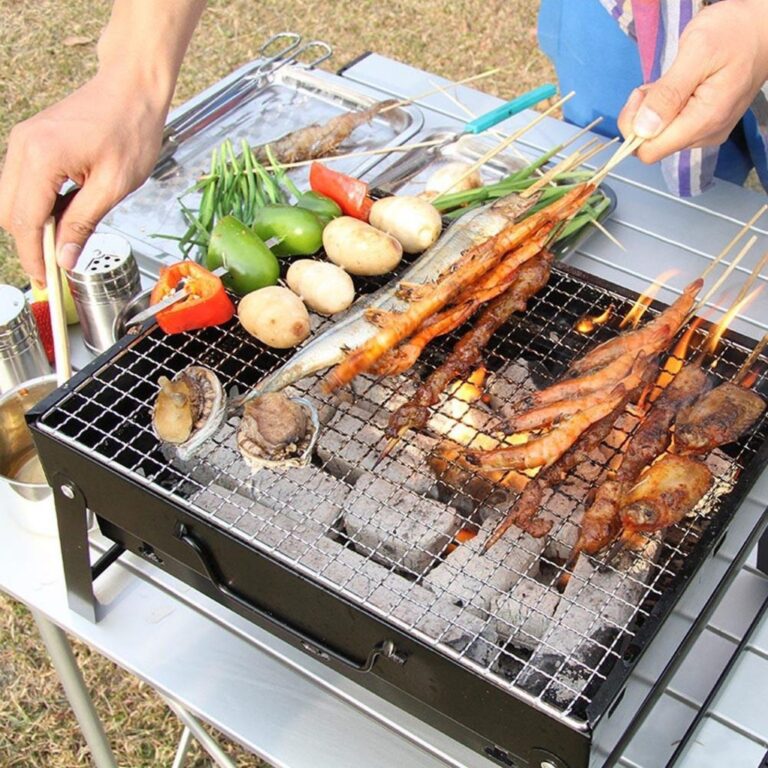

Choosing between a 4-burner, 6-burner, or 8-burner gas grill is mainly about cooking space, burner configuration, and how the grill will be used. A larger burner count does not automatically mean a better grill. For homeowners, restaurants, outdoor kitchen companies, and wholesale buyers, the right choice depends on the application.
4 Burner vs 6 Burner vs 8 Burner Gas Grill at a Glance
| Feature | 4 Burner Gas Grill | 6 Burner Gas Grill | 8 Burner Gas Grill |
|---|---|---|---|
| Cooking Capacity | Medium | Large | Extra large |
| Burner Count | 4 | 6 | 8 |
| Space Required | Lower | Moderate | Higher |
| Suitable For | Home & outdoor cooking | Larger households & commercial use | Commercial & high-volume cooking |
| Cooking Zones | Multiple | More flexible | Maximum flexibility |
| Fuel Consumption | Generally lower | Moderate | Generally higher |
| Typical Use | Everyday grilling | Parties, catering, larger outdoor kitchens | Commercial kitchens & high-volume BBQ |
The actual cooking area, burner output, grill dimensions, and fuel consumption vary between models, so burner count should not be the only specification you compare.
When Is a 4 Burner Gas Grill Enough?
A 4-burner gas grill can provide a good balance between cooking capacity and physical size. It is suitable when you need several cooking zones but do not regularly prepare large quantities of food.
For residential outdoor kitchens, family gatherings, and general outdoor cooking, four burners may provide enough flexibility without requiring the footprint of a larger grill.
A 4 burner model can also make sense for buyers who prioritize a more compact product while still wanting multiple burners for different cooking areas.
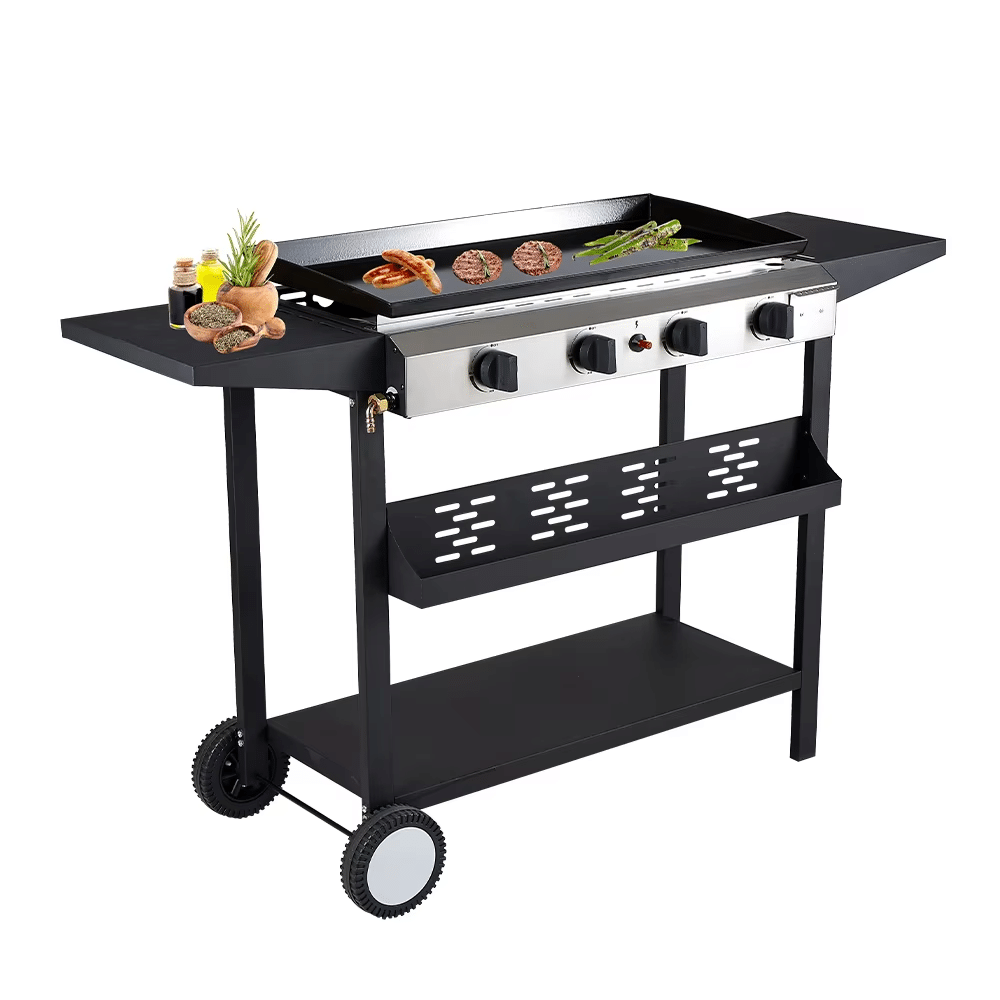
Why Choose a 6 Burner Gas Grill?
A 6-burner gas grill provides more cooking space and more burner zones than a 4-burner model. This can be useful when you need to cook several foods at the same time or require a larger cooking surface.
For example, our 6 burner gas grill features six main burners, each with a 10,000 BTU input, for a combined main burner input of 60,000 BTU. Its primary cooking area measures 970 × 500 mm.
This configuration can be considered for:
- Larger outdoor cooking areas
- Family and group gatherings
- Catering applications
- Commercial outdoor cooking
- Buyers looking for more cooking capacity without moving to an 8 burner configuration
For B2B buyers, the 6 burner category can also provide a practical middle ground when product size, cooking capacity, and target market requirements all need to be considered.
When Does an 8 Burner Gas Grill Make Sense?
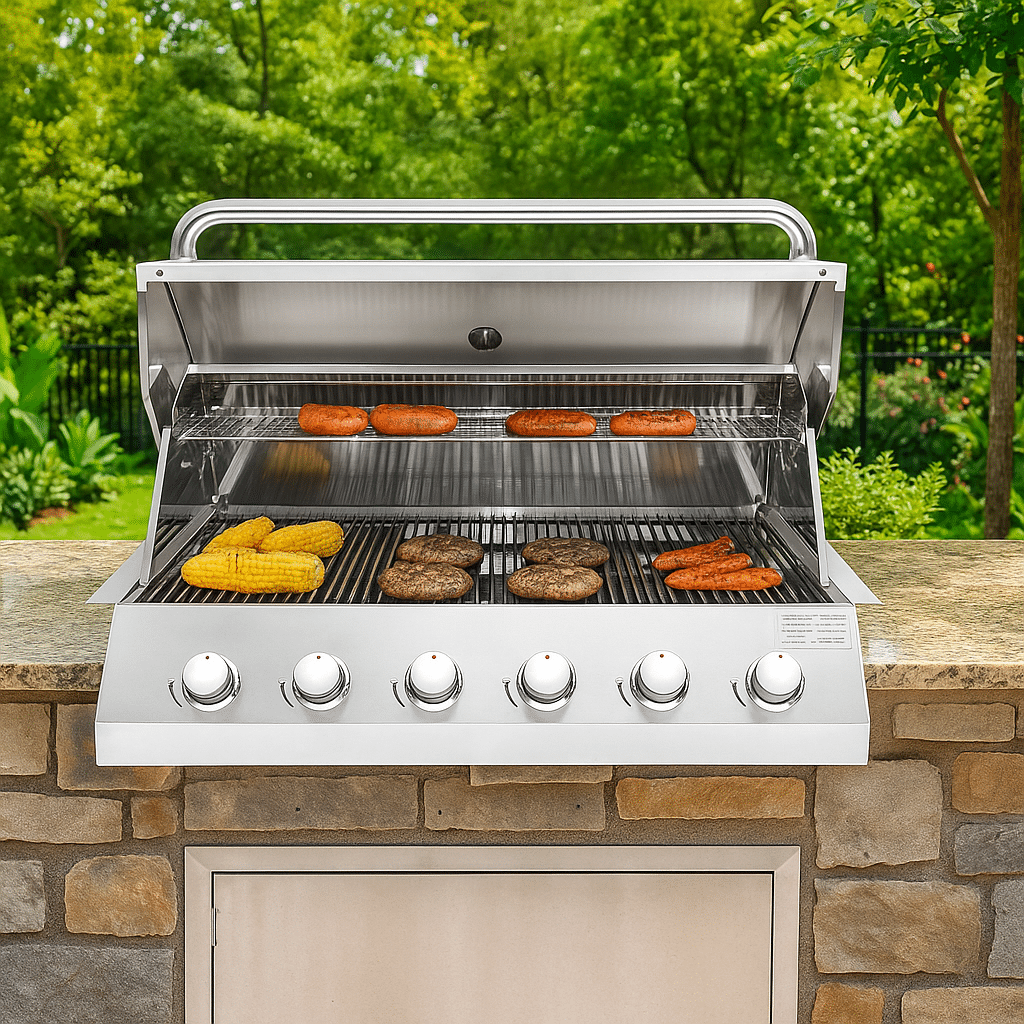
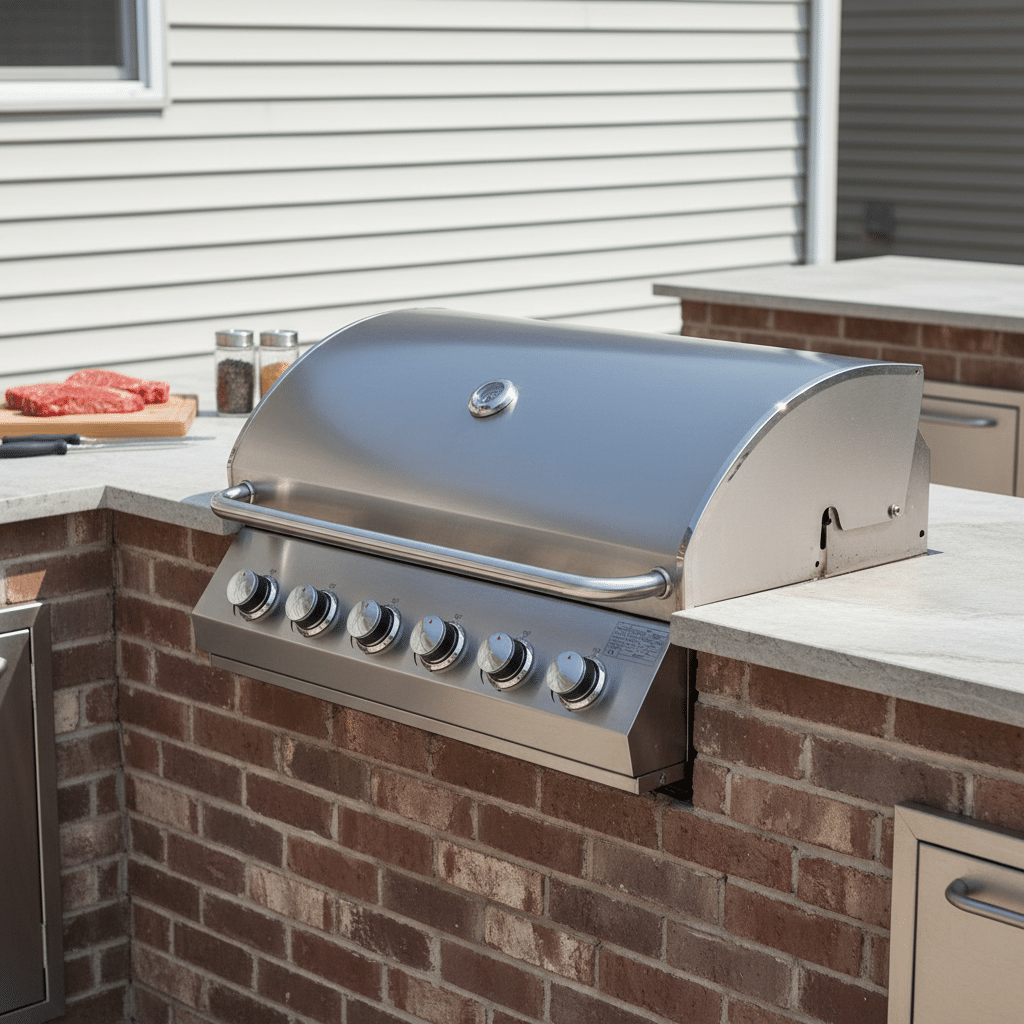
An 8-burner gas grill is designed for applications where a larger cooking surface and more burner zones are required.
With eight burners, the grill can provide more individual cooking areas. This can be useful for commercial buyers, catering businesses, restaurants, and outdoor kitchen projects where the grill may be used to prepare different foods simultaneously.
However, an 8 burner grill normally requires more physical space than a smaller configuration. Buyers should therefore check the available installation or operating area before selecting a larger model.
Burner Count Is Not the Whole Story
When comparing gas grills, it is easy to focus only on the number of burners. But burner count does not tell you everything about the grill.
A B2B buyer should also compare:
1. Primary Cooking Area
Two grills with the same number of burners can have very different cooking areas.
Check the actual cooking dimensions rather than relying only on the burner count.
2. Burner Output
Look at the input of each burner and the total burner input.
For example, a grill with six 10,000 BTU burners has a total main burner input of 60,000 BTU.
3. Grill Dimensions
A larger cooking area also means a larger overall product in many cases. Make sure the grill fits the intended outdoor kitchen, commercial space, or distribution market.
4. Ignition System
Electronic or piezo ignition systems can affect how the grill is operated. Check the actual ignition configuration of each model.
5. Fuel Type
If a grill is available for different gas types, confirm whether the target market requires LPG, natural gas, or another configuration before placing an order.


Which Burner Configuration Should B2B Buyers Choose?
For importers, wholesalers, and distributors, the decision is slightly different from that of an individual consumer.
Instead of asking only which grill is largest, consider the market you are supplying.
A 4 burner gas grill may fit markets where customers want a relatively compact outdoor cooking solution.
A 6 burner gas grill can target customers who need more cooking capacity for larger households, entertaining, or commercial applications.
An 8 burner gas grill can be considered for customers who prioritize larger cooking capacity and multiple cooking zones.
For wholesale projects, product dimensions, specifications, target retail positioning, packaging, customization, and order requirements should also be evaluated before selecting a configuration.
4 Burner vs 6 Burner vs 8 Burner: What Should You Check?
Before choosing a model, compare these specifications side by side:
- Number of burners
- Primary cooking area
- Burner output
- Total BTU input
- Overall dimensions
- Fuel type
- Ignition system
- Material
- Safety features
- Intended application
- Customization options
This gives buyers a more complete basis for comparing gas grills instead of choosing based on burner count alone.
Choosing a Gas Grill for Your Market
There is no single burner configuration that suits every buyer.
If your target market mainly needs compact outdoor cooking equipment, a 4 burner model may be appropriate.
If customers need more cooking space and multiple zones, a 6 burner gas grill can provide a larger configuration.
If the target application involves high-volume cooking or larger outdoor cooking setups, an 8 burner model may be worth considering.
For distributors and BBQ brands, offering different burner configurations can also allow products to target different customer segments rather than relying on one grill size.
Need a Custom Gas Grill?
For wholesale and OEM projects, burner count is only one part of the specification. Product dimensions, cooking area, burner configuration, materials, appearance, branding, and packaging can all be discussed according to the project requirements.
If you are sourcing 4 burner, 6 burner, or 8 burner gas grills, send us your target specifications, quantity, and customization requirements so we can discuss suitable options.
FAQ
1. Is a 6 burner gas grill better than a 4 burner gas grill?
Not necessarily. A 6 burner model provides more cooking zones and generally a larger cooking capacity, while a 4 burner model may be more suitable when a smaller grill is preferred.
2.What is the advantage of an 8 burner gas grill?
An 8 burner configuration can provide more cooking zones and is suitable for applications requiring a larger cooking capacity.
3.Does more burners mean more BTUs?
Not always. Total BTU input depends on the output of each burner, so buyers should compare both burner count and individual burner output.
4.How do I compare two gas grills with the same number of burners?
Compare their cooking area, burner output, dimensions, fuel type, ignition system, material, safety features, and other specifications.
5.What size gas grill is suitable for commercial use?
It depends on the application and expected cooking volume. Commercial buyers should consider cooking area, burner configuration, available space, and operating requirements rather than choosing based only on burner count.
6.Can gas grills with different burner counts be customized?
Customization depends on the manufacturer’s product structure and project requirements. For OEM projects, confirm the available burner configurations and other specifications before production.
7.Which is more suitable for wholesale, a 4, 6, or 8 burner gas grill?
The appropriate configuration depends on the target market, customer requirements, product size, and intended application. For wholesale sourcing, these factors should be evaluated together.


 US
US  DE
DE  AF
AF  AM
AM  AN
AN  AZ
AZ  AR
AR  AS
AS  BE
BE  DA
DA  EL
EL  ES
ES  ET
ET  JA
JA  ML
ML  KO
KO  SV
SV  FR
FR  IT
IT  RU
RU  DZ
DZ  HAZ
HAZ  CY
CY  EU
EU  GU
GU  FA
FA  FI
FI  UZ
UZ  UK
UK  TT
TT  ZH
ZH  GL
GL  KY
KY  FA_IR
FA_IR  HR
HR  VI
VI  HE
HE  ID
ID  RO
RO  ES_MX
ES_MX  KA
KA  CS
CS  DE_CH
DE_CH  EN
EN  PL
PL  BG
BG  PT
PT