Learning to cook on a charcoal BBQ grill is an enjoyable experience, but it also comes with a learning curve. Many beginners expect great barbecue results after lighting the charcoal, placing food on the grill, and waiting for it to cook. In reality, small mistakes can lead to burnt food, uneven cooking, excessive smoke, or a grill that simply won’t maintain the right temperature.
The good news is that these problems are easy to avoid once you understand the basics of charcoal grilling. From choosing the right amount of charcoal to controlling airflow and creating different cooking zones, a few simple techniques can dramatically improve your BBQ results.
In this guide, we’ll explore the 10 most common charcoal grill mistakes beginners make, explain why they happen, and show you how to avoid them. Whether you’re preparing burgers for your family or hosting a weekend backyard barbecue, these practical tips will help you grill with greater confidence.
Quick Answer
The most common charcoal grill mistakes include using too much lighter fluid, cooking before the charcoal is ready, opening the lid too often, ignoring airflow, adding too much charcoal, and forgetting to clean ash. By understanding these common mistakes and making a few simple adjustments, beginners can achieve better temperature control, more even cooking, and improved BBQ flavor.
10 Common Mistakes at a Glance
| Mistake | Quick Solution |
|---|---|
| Using too much lighter fluid | Use a chimney starter instead |
| Cooking before charcoal is ready | Wait until coals are covered with gray ash |
| Using only one heat zone | Create direct and indirect cooking zones |
| Opening the lid too often | Keep the lid closed whenever possible |
| Ignoring air vents | Control heat through airflow |
| Adding too much charcoal | Add fuel gradually |
| Forgetting to remove ash | Clean ash before each cook |
| Using poor-quality charcoal | Choose quality lump charcoal or briquettes |
| Cooking at the wrong temperature | Use a grill thermometer |
| Cutting meat immediately | Let meat rest before serving |
Mistake 1 – Using Too Much Lighter Fluid
One of the first mistakes many beginners make is believing that more lighter fluid will help the charcoal burn faster. Unfortunately, using excessive lighter fluid often creates strong chemical odors that can affect the flavor of your food.
Instead of soaking the charcoal, use only the amount recommended by the manufacturer or, even better, switch to a charcoal chimney starter. A chimney starter lights charcoal naturally without leaving unwanted chemical residue and provides a cleaner, more consistent fire.
Better Practice
Use a chimney starter whenever possible.
Avoid adding lighter fluid to already burning charcoal.
Wait until the lighter fluid has completely burned away before placing food on the grill.

Mistake 2 – Cooking Before the Charcoal Is Ready
Patience is one of the most valuable skills in charcoal grilling.
Many beginners place food on the grill immediately after lighting the charcoal. At this stage, the charcoal is still producing thick smoke and uneven heat, which can result in unpleasant flavors and inconsistent cooking.
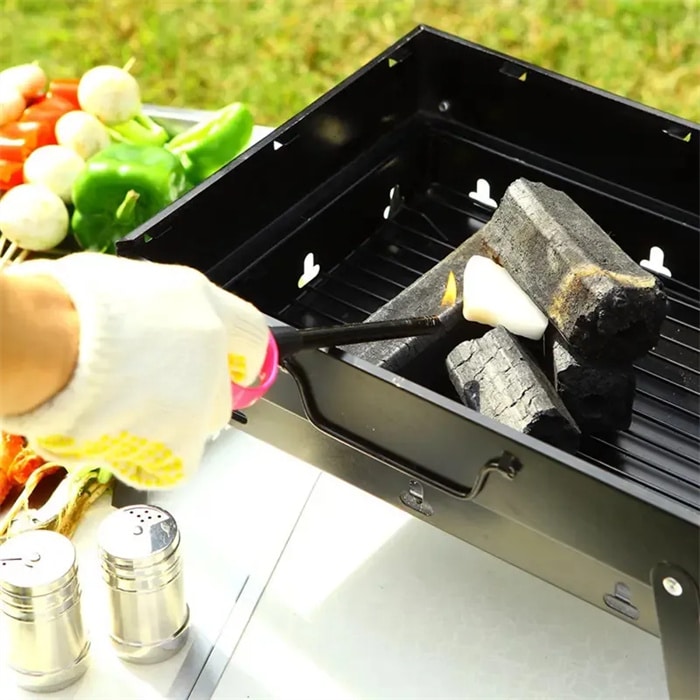
The correct time to begin grilling is when most of the charcoal is covered with a light gray layer of ash. This indicates that the charcoal has reached a stable temperature and is producing cleaner heat.
Signs Your Charcoal Is Ready
The flames have mostly disappeared.
The charcoal is glowing red underneath.
Most coals are covered with light gray ash.
Heat feels steady rather than aggressive.
Mistake3 – Using Only One Cooking Zone
Another common mistake is spreading charcoal evenly across the entire grill.
While this seems logical, it leaves you with only one cooking temperature. If food begins cooking too quickly, there’s nowhere to move it.
Professional grillers almost always create two cooking zones:
Direct Heat Zone – for searing steaks, burgers, and vegetables.
Indirect Heat Zone – for chicken, ribs, larger cuts of meat, or food that needs slower cooking.
Using two zones gives you much greater control and significantly reduces the risk of burning food.

Mistake 4 – Opening the Lid Too Often
Many beginners can’t resist checking their food every minute.
Unfortunately, every time you open the grill lid, heat escapes and fresh oxygen rushes into the fire. This causes temperature fluctuations and can increase charcoal consumption.
A better approach is to trust your cooking time, monitor the grill thermometer, and only open the lid when necessary to flip food or check doneness.
As many experienced BBQ enthusiasts say:”If you’re looking, you’re not cooking.”
Keeping the lid closed helps maintain a more stable cooking environment and produces better overall results.

Mistake 5 – Ignoring Air Vents
Many beginners believe that adding more charcoal is the only way to change the grill temperature. In reality, airflow is the primary factor that controls how hot your charcoal burns.
Every charcoal grill has air vents, usually located at the bottom and top of the grill.
Bottom Vent – Controls the amount of oxygen entering the grill.
Top Vent – Allows heat and smoke to escape while maintaining airflow.
Opening the vents increases oxygen, causing the charcoal to burn hotter. Closing them slightly reduces airflow and lowers the cooking temperature.
Instead of adding more charcoal every time the temperature changes, learn to make small vent adjustments and allow a few minutes for the grill to respond.
Pro Tips
Keep the top vent at least partially open during cooking.
Make small adjustments rather than fully opening or closing the vents.
Wait 5–10 minutes after each adjustment before making another change.
Want to master airflow and heat management? Read our detailed guide How to Control Temperature on a Charcoal Grill.
Mistake 6 – Adding Too Much Charcoal at Once
Another common mistake is adding a large amount of fresh charcoal when the grill starts losing heat.
Although this may seem like a quick solution, too much charcoal can cause sudden temperature spikes, making food burn on the outside while remaining undercooked inside.
The better approach is to add charcoal gradually.
For long cooking sessions, light fresh charcoal in a chimney starter first, then add small amounts to the existing fire as needed.
Recommended Amount
Remaining Cooking Time Suggested Charcoal
Less than 30 minutes 6–8 briquettes
30–60 minutes 8–12 briquettes
More than 1 hour
Learn the safest refueling method in How to Add More Charcoal While Cooking Without Losing Heat.


Mistake 7 – Forgetting to Clean Ash
Ash is often overlooked, but it has a major impact on grill performance.
As charcoal burns, ash collects beneath the charcoal grate and blocks airflow. Reduced airflow makes the charcoal burn less efficiently, causing lower temperatures and inconsistent cooking.
Before each barbecue, remove old ash from the firebox and ash pan.
If you’re cooking for several hours, check the ash periodically and remove excess buildup if your grill design allows.
Ash is often overlooked, but it has a major impact on grill performance.
As charcoal burns, ash collects beneath the charcoal grate and blocks airflow. Reduced airflow makes the charcoal burn less efficiently, causing lower temperatures and inconsistent cooking.
Before each barbecue, remove old ash from the firebox and ash pan.
If you’re cooking for several hours, check the ash periodically and remove excess buildup if your grill design allows.
Benefits of Regular Ash Removal
Better airflow
More stable temperatures
Faster charcoal ignition
Less smoke
Easier grill maintenance
A clean grill is easier to control and delivers more reliable cooking results.
Mistake 8 – Using Poor-Quality Charcoal
Not all charcoal burns the same.
Low-quality charcoal may contain excessive dust, moisture, or inconsistent-sized pieces, leading to unstable temperatures and excessive ash.
For better grilling performance, choose high-quality lump charcoal or premium briquettes from trusted manufacturers.
Lump Charcoal
Pros
Burns hotter
Lights quickly
Produces natural wood flavor
Less ash
Cons
Burns faster
Irregular sizes
Charcoal Briquettes
Pros
Consistent size
Longer burn time
Stable cooking temperature
Cons
Produces more ash
Takes slightly longer to ignite
Both options work well when used correctly. Choose the one that best matches your cooking style.
Expert Tips from Professional BBQ Manufacturers
Experienced grill manufacturers understand that great grilling depends not only on technique but also on equipment design.
When choosing a charcoal BBQ grill, look for features that make temperature control easier:
Adjustable air vents for precise airflow.
Deep charcoal tray for longer burn times.
Durable steel construction for better heat retention.
Easy-access charcoal door for adding fuel.
Removable ash pan for quick cleaning.
Heavy-duty cooking grates for even heat distribution.
These features improve cooking consistency and make grilling more enjoyable for beginners and experienced users alike.
Mistake 9 – Cooking at the Wrong Temperature
Many beginners focus only on cooking time, but experienced grillers know that temperature is far more important than the clock.
Different foods require different heat levels. Grilling everything over the same high heat often leads to burnt exteriors, dry meat, or undercooked interiors.
A simple grill thermometer can make a huge difference by helping you maintain the right cooking temperature throughout the barbecue.
Recommended Charcoal Grill Temperatures
Food Recommended Temperature
Steak 450–550°F (230–290°C)
Burgers 400–450°F (205–230°C)
Chicken 350–400°F (175–205°C)
Fish 350–400°F (175–205°C)
Vegetables 375–425°F (190–220°C)
Pork Ribs 225–275°F (107–135°C)
Instead of constantly moving food around the grill, aim to maintain a stable cooking temperature and let the grill do the work.
Mistake 10 – Cutting Meat Immediately After Grilling
After spending time preparing and grilling your food, it’s tempting to serve it immediately.
However, cutting meat too soon allows the juices to escape, leaving it drier than it should be.
Letting the meat rest gives the juices time to redistribute, resulting in a more tender and flavorful bite.
Recommended Resting Times
| Food | Rest Time |
|---|---|
| Steak | 5–10 minutes |
| Burgers | 3–5 minutes |
| Chicken | 5–10 minutes |
| Pork | 8–10 minutes |
| Large Roasts | 15–20 minutes |
This simple habit can noticeably improve the texture and taste of your barbecue.
Before lighting your charcoal grill, take a moment to review this checklist:
Use quality charcoal.
Light the charcoal properly.
Wait until the coals are covered with gray ash.
Set up direct and indirect heat zones.
Adjust the air vents for temperature control.
Keep the lid closed whenever possible.
Add charcoal gradually during long cooks.
Clean ash before and after grilling.
Use a thermometer to monitor cooking temperature.
Let meat rest before serving.
Following these simple steps will help you avoid the most common beginner mistakes and produce more consistent barbecue results.
Quick Checklist Before Every BBQ
FAQ
Why does my charcoal grill keep losing heat?
Common causes include insufficient charcoal, blocked air vents, ash buildup, wet charcoal, or opening the lid too frequently.
Is lump charcoal better than briquettes?
Both have advantages. Lump charcoal burns hotter and produces a natural wood flavor, while briquettes provide a longer and more consistent burn.
Should I keep the vents open while grilling?
Yes. The top vent should remain at least partially open, while the bottom vent can be adjusted to increase or decrease airflow.
How often should I add charcoal?
For long cooking sessions, add small amounts of pre-lit charcoal before the existing fuel is completely burned out.
Can I grill with the lid open?
You can for quick searing, but cooking with the lid closed usually provides more even temperatures and better heat retention.
What is the biggest mistake beginners make?
Starting to cook before the charcoal is fully ready is one of the most common mistakes. Waiting until the coals are covered with gray ash results in cleaner heat and better flavor.
Mastering charcoal grilling doesn’t happen overnight, but avoiding these common mistakes will help you improve much faster.
By paying attention to airflow, charcoal quality, cooking temperature, and proper grill maintenance, you’ll enjoy more consistent heat, better flavor, and a more enjoyable grilling experience.
Whether you’re preparing a simple family dinner or hosting a backyard barbecue with friends, these small improvements can make a noticeable difference in every meal.
🔗 Product Recommendation
Ready to upgrade your outdoor cooking experience?
Explore our complete collection of Charcoal BBQ Grills, designed with adjustable air vents, durable steel construction, and efficient heat management for backyard cooking, camping, restaurants, and commercial BBQ applications.


 AZ
AZ  US
US  DE
DE  AF
AF  AM
AM  AN
AN  AR
AR  AS
AS  BE
BE  DA
DA  EL
EL  ES
ES  ET
ET  JA
JA  ML
ML  KO
KO  SV
SV  FR
FR  IT
IT  RU
RU  DZ
DZ  HAZ
HAZ  CY
CY  EU
EU  GU
GU  FA
FA  FI
FI  UZ
UZ  UK
UK  TT
TT  ZH
ZH  GL
GL  KY
KY  FA_IR
FA_IR  HR
HR  VI
VI  HE
HE  ID
ID  RO
RO  ES_MX
ES_MX  KA
KA  CS
CS  DE_CH
DE_CH  EN
EN  PL
PL  BG
BG  PT
PT