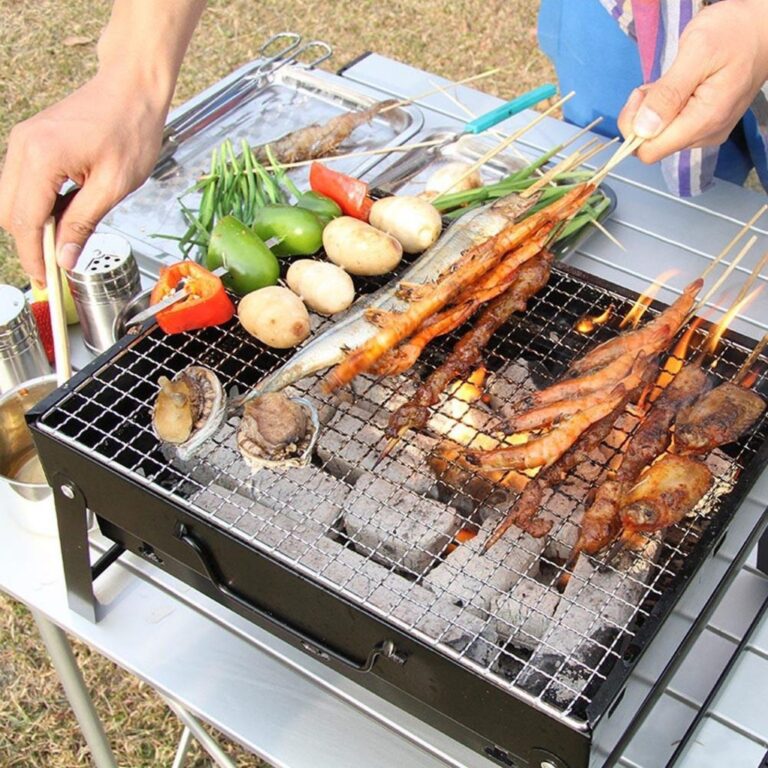

Choosing the right BBQ Grill Manufacturer in China is not simply about finding the lowest price.
For importers, wholesalers, outdoor living brands, restaurant suppliers, and project buyers, the more important question is whether the manufacturer can consistently deliver the right product, quality, customization, packaging, and production support.
A supplier may offer an attractive quotation, but that does not tell you how well the grill is made, whether the specifications can be customized, or how smoothly the order will be handled after you place it.
If you are sourcing BBQ grills from China, this guide explains the main things I recommend checking before choosing a manufacturer.
Why Choosing the Right BBQ Grill Manufacturer Matters
A BBQ grill is not just a metal box with a cooking grate.
Depending on the product, its performance can be affected by material selection, steel thickness, airflow, burner configuration, welding, surface treatment, cooking area, heat distribution, and many other details.
The right manufacturer should therefore be able to discuss these details with you instead of only sending a price list.
This becomes even more important when you are developing a private-label product or purchasing in bulk.
A good manufacturer should be able to help you move from:
Product idea → Specification → Sample → Production → Quality Control → Packaging → Shipment
rather than treating every order as a standard product with a fixed specification.
What Types of BBQ Grills Can a Manufacturer Supply?
Before comparing suppliers, define what type of BBQ grill you actually need.
A capable BBQ manufacturer may work with several product categories, including:
| BBQ Grill Type | Common Applications | Important Points to Check |
|---|---|---|
| Charcoal BBQ Grill | Backyard cooking, retail, outdoor living | Airflow, cooking area, steel thickness |
| Gas BBQ Grill | Outdoor kitchens, retail, restaurants | Burners, gas system, safety components |
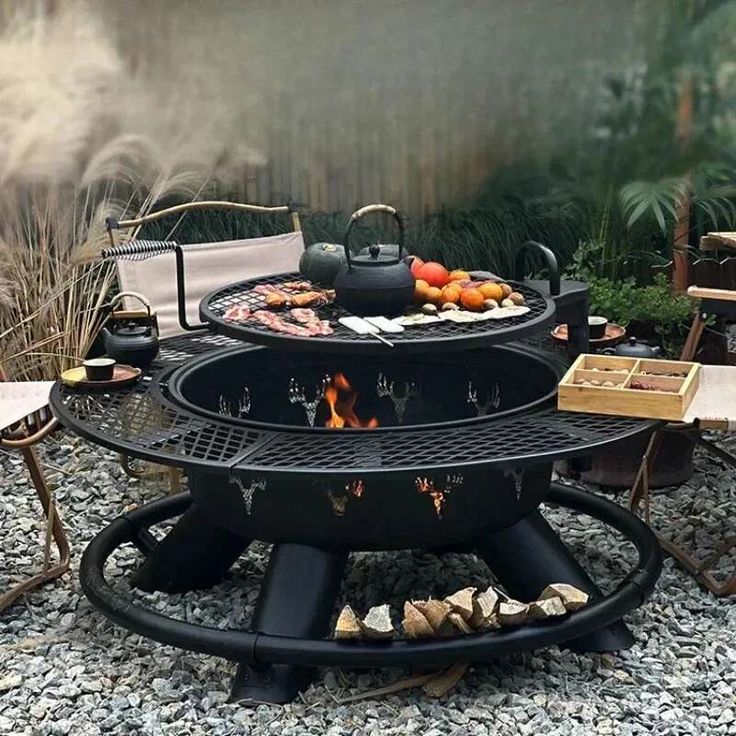
| Wood-Fired BBQ Grill | Outdoor cooking, restaurants, garden projects | Heat resistance, airflow, structure |
| Pellet Grill | Outdoor cooking and BBQ brands | Pellet system, temperature control |
| Corten Steel BBQ Grill | Garden and architectural applications | Material, patina, structure |
| Stainless Steel BBQ Grill | Premium outdoor kitchens and commercial use | Steel grade, finish, durability |
| Commercial BBQ Grill | Restaurants, catering, hospitality | Capacity, durability, maintenance |
| Custom BBQ Grill | Private-label and project orders | Design, dimensions, logo, packaging |
The important point is that you should choose a manufacturer based on your actual product requirements, rather than assuming that the supplier with the largest product catalog is automatically the best choice.
1. Check Whether the Supplier Is Actually a Manufacturer
One of the first things I would check is whether the company actually manufactures BBQ grills or mainly trades products from different factories.
This distinction matters when you need customization.
A trading company may be able to provide several standard models, but a manufacturer with its own production capabilities is usually in a better position to discuss changes to dimensions, materials, structure, welding, surface treatment, packaging, and other specifications.
When evaluating a supplier, ask:
- Do you manufacture the BBQ grills in-house?
- Which production processes are handled by your factory?
- Can you provide factory or production photos?
- What BBQ grill types do you currently manufacture?
- Can you produce according to drawings or samples?
- Can you support OEM or ODM projects?
You do not necessarily need the largest factory.
For many buyers, what matters more is whether the manufacturer’s capabilities match the product you want to develop.

2. Look Carefully at Materials and Construction
Material is one of the most important factors in BBQ grill manufacturing.
Stainless steel, Corten steel, mild steel, cast iron, and other materials can all be used for different applications. There is no single material that is automatically the best for every BBQ grill.
For example, stainless steel may be attractive for buyers looking for a clean appearance and relatively easy maintenance, while Corten steel can be particularly interesting for outdoor and architectural applications where its natural weathered appearance is part of the product design.
Do not simply ask:
“What material do you use?”
Ask more specific questions.
Questions worth asking include:
- What grade of stainless steel is used?
- What is the material thickness?
- Which components use different materials?
- What material is used for the cooking grate?
- How are high-temperature areas constructed?
- What surface treatment is used?
- How is corrosion resistance considered?
- Can the material specification be customized?
For a custom BBQ grill, material selection should be discussed together with the intended application.
A backyard grill, restaurant grill, outdoor kitchen grill, and architectural Corten BBQ may have very different requirements.

3. Check the Manufacturer’s OEM and Customization Capabilities
If you are building your own brand, this may be one of the most important parts of the supplier evaluation.
OEM does not simply mean putting your logo on an existing grill.
Depending on the project, customization may involve:
Grill dimensions/Overall shape/Cooking area/Material/Steel thickness/Cooking grate/Burners/Fuel type/Handles/Wheels/Shelves/Accessories/Logo/Surface finish/Color/Packaging/Product labels
For more complex projects, ODM may also involve product development and design adjustments.
Before placing an order, ask the manufacturer what can actually be customized.
A useful question is:
“Can you manufacture this according to our drawings or sample?”
If the answer is yes, follow up by asking how they normally handle the development process.
A clear development process is often more valuable than a supplier simply saying “OEM available.”

4. Understand MOQ Before Comparing Prices
MOQ, or minimum order quantity, can have a major effect on your purchasing decision.
A standard BBQ grill may have a different MOQ from a fully customized product.
For example, adding a new logo or packaging design may be relatively simple, while changing the structure, dimensions, or tooling can require additional development work.
So instead of asking only:
“What is your MOQ?”
ask:
- What is the MOQ for standard products?
- What is the MOQ for OEM products?
- Does custom packaging have a different MOQ?
- Does changing the dimensions affect MOQ?
- Is a sample available before bulk production?
If you are launching a new product, a sample can be especially useful.
It allows you to check the actual construction, dimensions, finish, packaging, and usability before committing to a larger order.
5. Always Ask for a Sample When the Product Is New
Photos and specifications are useful, but they cannot show you everything.
A physical sample lets you check details such as:
- Welding quality
- Edge finishing
- Surface treatment
- Material appearance
- Cooking grate construction
- Door or lid operation
- Assembly
- Stability
- Packaging
- Overall product feel
For a custom BBQ grill, the sample stage can also reveal design problems before mass production begins.
This is particularly important if you are selling the product under your own brand.
A sample should not only answer:
“Does it look like the picture?”
It should help answer:
“Is this product ready for my market?”
6. Ask How Quality Control Is Handled
Quality control should not begin after the finished grills are already packed.
A good production process should have quality checks at appropriate stages.
Depending on the product, these may include:
Material Inspection
Check whether the incoming material matches the agreed specification.
Production Inspection
Check cutting, bending, welding, grinding, and assembly during production.
Finished Product Inspection
Check dimensions, appearance, structure, components, and functionality before shipment.
Packaging Inspection
Check whether the finished products are properly protected for transportation.
When talking with a manufacturer, ask:
“What do you normally inspect before shipment?”
This is a much better question than simply asking:
“Do you have quality control?”
You want to understand what is actually checked.
7. Do Not Ignore Export Packaging
A BBQ grill can look perfect when it leaves the factory and still arrive damaged if the packaging is not suitable for international transportation.
Packaging requirements can vary depending on:
- Product size
- Product weight
- Product structure
- Shipping method
- Container loading
- Destination market
- Retail requirements
Ask the manufacturer about:
- Individual packaging
- Carton specifications
- Protective materials
- Product labeling
- Pallet requirements
- Container loading
- Customized packaging
If you are selling through retail channels, packaging can also become part of the product itself.
In that case, your requirements may include your own logo, artwork, barcode, instructions, labels, and other retail information.
8. Compare Production Lead Time Carefully
Production lead time is another area where buyers sometimes focus too much on a single number.
A standard product and a custom BBQ grill should not necessarily have the same production schedule.
Lead time may depend on:
- Product complexity
- Quantity
- Material availability
- Customization
- Sample approval
- Packaging
- Production schedule
Instead of asking:
“How many days?”
ask:
“What is the estimated production lead time after all specifications and samples are confirmed?”
This gives you a much more useful reference.
For custom products, make sure you also understand whether the quoted lead time starts from the order date, deposit date, drawing approval, or sample approval.
9. Do Not Choose a Manufacturer Based on Price Alone
This is probably one of the easiest mistakes to make when sourcing from China.
Imagine that three manufacturers give you these quotations:
| Supplier | Price | Customization | Quality Information | Packaging |
|---|---|---|---|---|
| A | Low | Limited | Basic | Standard |
| B | Medium | Flexible | Detailed | Export-focused |
| C | High | Extensive | Detailed | Customized |
Supplier A may look attractive when you only compare unit prices.
But if its material specification, packaging, customization, or quality control is different, the three quotations are not actually comparable.
When comparing prices, make sure you compare the same:
- Material
- Thickness
- Dimensions
- Components
- Cooking grate
- Accessories
- Surface finish
- Packaging
- Logo
- Quantity
- Shipping terms
A lower unit price does not necessarily mean a lower total purchasing cost.
10. Communication Is Part of Supplier Evaluation
This sounds simple, but it matters.
Before placing a large order, pay attention to how the manufacturer handles your questions.
Does the supplier:
- Understand your specifications?
- Ask useful questions?
- Point out potential problems?
- Provide clear drawings or specifications?
- Explain what can and cannot be customized?
- Give consistent information?
- Respond clearly when something changes?
For custom BBQ projects, communication is especially important.
A manufacturer that identifies a potential production problem before manufacturing starts can save you much more money than a supplier that simply says “yes” to everything.
I would rather work with a supplier that says:
“This specification may need to be changed because of the production process.”
than one that accepts every request without discussing how it will actually be manufactured.
Questions to Ask a BBQ Grill Manufacturer Before Ordering
Before making a final decision, you can use this checklist:
Product
- What types of BBQ grills do you manufacture?
- Can you manufacture according to drawings?
- Can the dimensions be customized?
- What materials are available?
- What material thicknesses are available?
OEM / ODM
- Can you add our logo?
- Can you customize the product structure?
- Can you customize the packaging?
- Can you develop a product from a sample?
- Can you make design changes?
Order
- What is the MOQ?
- Can we order a sample?
- How long does sample production take?
- What is the estimated bulk production lead time?
Quality
- What inspections are performed?
- How are materials checked?
- How are finished products inspected?
- Can third-party inspection be arranged if required?
Packaging
- How are the grills packaged?
- Can packaging be customized?
- How are products protected during container shipping?
The more specific the answers, the easier it becomes to compare manufacturers fairly.
What Information Should You Send When Requesting a BBQ Grill Quote?
If you want an accurate quotation, do not send only:
“Please send me your best price for BBQ grills.”
A manufacturer needs enough information to understand what you actually want.
A useful RFQ should include:
1. BBQ Grill Type
For example:
- Charcoal
- Gas
- Wood-fired
- Pellet
- Commercial
- Custom
2. Material
For example:
- Stainless steel
- Corten steel
- Mild steel
- Other specified materials
3. Dimensions
Provide the target dimensions or drawings if available.
4. Quantity
Give your estimated order quantity.
5. Customization
Mention any requirements for:
- Logo
- Color
- Surface finish
- Structure
- Accessories
- Packaging
6. Target Market
If relevant, tell the manufacturer where you plan to sell the product.
Different markets may have different requirements for product configuration, labeling, packaging, and compliance.
7. Reference Products
If you have a similar product, provide photos, drawings, links, or samples.
The more complete the information, the easier it is for a manufacturer to provide a useful quotation instead of a rough price.
![Looking for a BBQ Grill Manufacturer? If you are sourcing BBQ grills for wholesale, retail, outdoor living brands, restaurants, or custom projects, the right manufacturer should be able to discuss your requirements before discussing the final price. At BBQ Grill Global, we work with different BBQ grill requirements, including charcoal, gas, wood-fired, pellet, Corten steel, stainless steel, commercial, and customized BBQ grill projects. Whether you already have a finished design or only have an initial product idea, providing your required grill type, material, dimensions, quantity, and customization requirements is the best place to start. Have a BBQ grill project in mind? [Request a Quote] Or explore our BBQ Grill Products to compare available product types and configurations.](https://bbqgrillglobal.com/wp-content/uploads/2026/09/H3379192ccbe74ed1b199f9456e1adcf5h.png)
A Simple Checklist for Choosing Your BBQ Grill Manufacturer
Before placing your first bulk order, I recommend checking these eight areas:
1. Manufacturing capability
Can they actually produce the product you need?
2. Product quality
Are materials, construction, welding, and finishing clearly specified?
3. OEM capability
Can they customize more than just the logo?
4. Sample process
Can you evaluate the actual product before bulk production?
5. Quality control
Is there a clear inspection process?
6. Packaging
Is the packaging suitable for international transportation and your sales channel?
7. Production
Are MOQ and lead time clearly explained?
8. Communication
Can the supplier understand and solve problems during development?
If a manufacturer performs well across these areas, you have a much better basis for building a long-term relationship.
Looking for a BBQ Grill Manufacturer?
If you are sourcing BBQ grills for wholesale, retail, outdoor living brands, restaurants, or custom projects, the right manufacturer should be able to discuss your requirements before discussing the final price.
At BBQ Grill Global, we work with different BBQ grill requirements, including charcoal, gas, wood-fired, pellet, Corten steel, stainless steel, commercial, and customized BBQ grill projects.
Whether you already have a finished design or only have an initial product idea, providing your required grill type, material, dimensions, quantity, and customization requirements is the best place to start.
Have a BBQ grill project in mind?
Or explore our BBQ Grill Products to compare available product types and configurations.


 EU
EU  US
US  DE
DE  AF
AF  AM
AM  AN
AN  AZ
AZ  AR
AR  AS
AS  BE
BE  DA
DA  EL
EL  ES
ES  ET
ET  JA
JA  ML
ML  KO
KO  SV
SV  FR
FR  IT
IT  RU
RU  DZ
DZ  HAZ
HAZ  CY
CY  GU
GU  FA
FA  FI
FI  UZ
UZ  UK
UK  TT
TT  ZH
ZH  GL
GL  KY
KY  FA_IR
FA_IR  HR
HR  VI
VI  HE
HE  ID
ID  RO
RO  ES_MX
ES_MX  KA
KA  CS
CS  DE_CH
DE_CH  EN
EN  PL
PL  BG
BG  PT
PT